


 Well-known PCB supplier
+86 13603063656
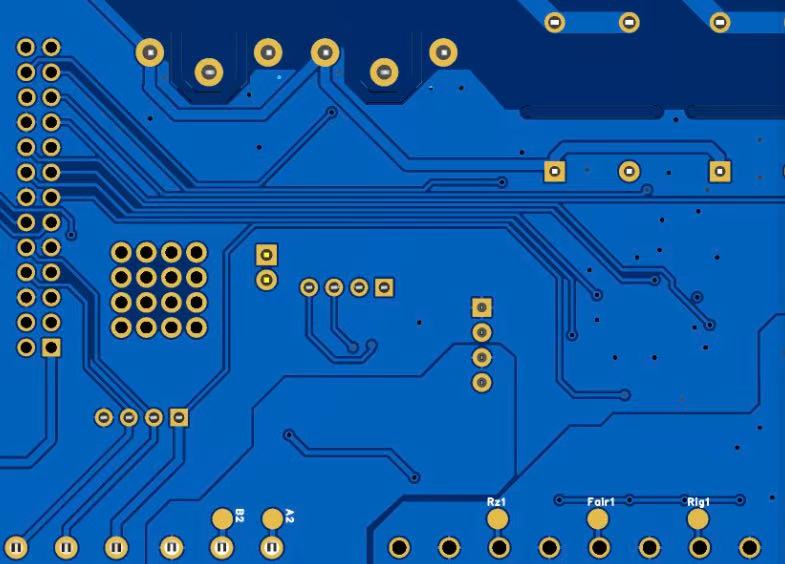
In the relentless pursuit of higher density, better reliability, and improved electrical performance, modern printed circuit board manufacturing has evolved far beyond traditional layer stacking. As interconnect complexity increases and material tolerances tighten, subtle structural elements once considered secondary now play decisive roles in determining final product quality. Among these elements, the Cap-Layer stands out as one of the least discussed yet most influential components in advanced PCB lamination.
From high-layer-count rigid boards to HDI architectures and IC substrates, the Cap-Layer functions as both a protective interface and a performance enabler. While it rarely attracts attention during early design discussions, its influence becomes undeniable when manufacturers face issues such as lamination voids, copper cracking, dielectric deformation, or inconsistent impedance.
Based on my experience observing PCB failures, yield loss investigations, and lamination optimization projects, I believe the Cap-Layer deserves more strategic consideration than it typically receive
Cap Layer
A Cap-Layer in PCB manufacturing refers to a dedicated outer or intermediate material layer applied during lamination to encapsulate, protect, and mechanically stabilize internal copper structures and dielectric layers. Unlike functional signal or power layers, the Cap-Layer does not primarily serve as an electrical routing plane. Instead, it acts as a structural and protective interface between the PCB core and subsequent processing steps.
From a process perspective, the Cap-Layer is typically composed of resin-coated copper foil (RCC), prepreg-copper composites, or specialized dielectric films with controlled resin flow properties. Its defining feature is its role during lamination: it absorbs pressure, redistributes thermal stress, and ensures uniform resin flow across the board surface.
What distinguishes the Cap-Layer from standard outer layers is intent. While outer layers are designed for circuitry, soldering, and surface finishes, the Cap-Layer is designed for stability—both during lamination and throughout the board’s operational life.
In multilayer PCB stacks, each interface represents a potential failure point. Copper expands differently from resin; glass fibers behave differently under heat than polymer matrices. The Cap-Layer functions as a buffer that mediates these mismatches.
From my observation, many lamination-related defects—such as micro-delamination, resin starvation, or copper print-through—are not caused by core material defects, but by insufficient buffering at the outermost lamination interface. A well-designed Cap-Layer smooths pressure gradients and accommodates material movement during thermal cycling.
This buffering effect becomes increasingly critical as boards become thinner while layer counts rise. Without a Cap-Layer, the lamination process often becomes less forgiving, leaving little margin for variation in prepreg flow or copper thickness.
The performance of a Cap-Layer depends heavily on its material composition. Common configurations include:
Resin-coated copper foils with controlled resin content
High-Tg prepreg paired with thin copper foil
Low-flow dielectric films for dimensional control
Each option introduces different trade-offs. Resin-rich Cap-Layers enhance surface conformity but risk resin bleed. Copper-heavy Cap-Layers improve mechanical stiffness but can exacerbate CTE mismatch.
In advanced PCB manufacturing, material selection for the Cap-Layer is often driven by lamination temperature profiles, target board thickness, and reliability requirements rather than cost alone.
During lamination, pressure uniformity is critical. Uneven pressure can cause copper distortion, resin pooling, or localized dielectric thinning. The Cap Layer plays a central role in redistributing lamination pressure across the panel surface.
In practical terms, the Cap Layer acts like a mechanical equalizer. It absorbs local pressure spikes caused by copper features underneath and ensures that resin flows consistently across both dense and sparse circuit areas.
From a process engineering standpoint, boards lacking an optimized Cap Layer often exhibit higher sensitivity to press parameter variation. This sensitivity translates into tighter process windows and higher scrap rates.
Resin flow during lamination is both necessary and dangerous. Insufficient flow results in voids; excessive flow causes resin starvation in critical areas. The Cap Layer influences this balance by controlling how and where resin migrates under heat and pressure.
In my experience, the most effective Cap Layer designs are those that do not aim to eliminate resin flow, but to guide it. By carefully selecting resin viscosity and glass content, manufacturers can encourage uniform wetting while preventing uncontrolled bleed-out at panel edges.
This function becomes especially important in HDI and substrate-like PCBs where microvias and fine features amplify the consequences of even minor resin inconsistencies.
Beyond physical effects, the Cap Layer serves as a process stabilizer. It compensates for variability in core thickness, copper roughness, and prepreg resin content. When properly implemented, it allows lamination recipes to remain stable across different production lots.
High-volume manufacturers with mature lamination processes often rely on Cap Layer optimization as a quiet but powerful method to maintain yield consistency. Leading suppliers such as JM PCB emphasize Cap Layer material matching as part of their advanced lamination control strategy, especially for high-layer-count and high-reliability applications.
Mechanical rigidity is not only about thickness—it is about how layers interact under load. The Cap Layer adds stiffness to the outer structure, reducing warpage and bending during both fabrication and assembly.
Boards without adequate Cap Layer support often exhibit higher deformation during reflow soldering. This deformation increases stress on vias, solder joints, and copper traces, ultimately reducing long-term reliability.
From a mechanical reliability perspective, the Cap Layer acts as the first line of defense against external stress.
Thermal cycling remains one of the most destructive stressors for PCBs. Repeated expansion and contraction can initiate microcracks at copper-dielectric interfaces. The Cap-Layer mitigates this effect by reducing stress concentration at the board surface.
By providing a compliant yet supportive outer layer, the Cap-Layer allows controlled movement rather than abrupt strain transfer. This behavior significantly improves resistance to copper fatigue and delamination over extended temperature cycling.
Manufacturers targeting automotive, industrial, or aerospace markets increasingly treat Cap-Layer selection as a reliability decision rather than a cost-driven one.
Although the Cap-Layer is not a signal layer, it indirectly influences impedance by affecting dielectric thickness uniformity. Variations in outer dielectric thickness can alter controlled impedance traces located just beneath the surface.
A stable Cap-Layer ensures consistent spacing between copper features and reference planes, reducing impedance drift across the panel. This stability is especially valuable in high-speed digital designs where tolerance margins are narrow.
Signal integrity issues often originate from mechanical causes rather than electrical design errors. Copper deformation, dielectric thinning, and resin voids all degrade signal performance. The Cap-Layer reduces the likelihood of these defects by maintaining structural uniformity.
| Manufacturing Stage | Cap Layer Contribution | Key Benefit |
|---|---|---|
| Lamination | Pressure redistribution and resin containment | Reduced voids and delamination |
| Drilling / Laser Processing | Surface stability | Improved via geometry consistency |
| Imaging & Etching | Flatness maintenance | Better line width uniformity |
| Surface Finish | Support for plating uniformity | Improved solderability |
| Assembly / Reflow | Warpage resistance | Lower solder joint defects |
| Field Operation | Stress buffering | Extended service life |
The Cap-Layer may not carry signals, distribute power, or appear in schematics—but its influence permeates every stage of PCB manufacturing and operation. From lamination stability and impedance consistency to long-term reliability and assembly performance, it quietly shapes outcomes that define product success or failure.
Throughout this article, I have emphasized a central idea: the Cap-Layer should not be treated as a passive cover, but as an active structural system. Its material composition, thickness, and compatibility determine how well a PCB tolerates heat, pressure, moisture, and time.
In an era where PCB technology approaches the limits of material science and process control, overlooking such foundational elements is no longer viable. Engineers who rethink the Cap Layer as a strategic design variable—not a default material choice—will gain measurable advantages in yield, reliability, and customer trust.
Ultimately, excellence in PCB manufacturing is not only about adding more layers or finer lines. It is about understanding how every layer, especially the quiet ones like the Cap Layer, contributes to the whole.
Ideally, Cap Layer considerations should be addressed during early stack-up planning alongside dielectric selection and impedance control, rather than being finalized after routing is complete.
Yes. The Cap Layer influences dielectric thickness uniformity, surface stability, and mechanical stress distribution, all of which indirectly affect impedance control and signal integrity in adjacent layers.
Not necessarily. While increased thickness can improve mechanical buffering, it may also increase stress transfer or negatively impact impedance and board thickness targets. Optimal Cap Layer design balances stiffness and compliance.
The Cap Layer affects pressure distribution and resin flow during lamination. Properly engineered Cap Layer materials widen process windows and reduce defects such as voids, resin starvation, and copper distortion.
Yes. HDI, power electronics, and substrate-like PCBs impose different mechanical and thermal demands. Customizing the Cap Layer for each application often results in better yield and long-term reliability.


Connect to a Jerico Multilayer PCB engineer to support your project!
Request A Quote
 Quote
Quote
 E-mail
 Whatsapp