


 Well-known PCB supplier
+86 13603063656
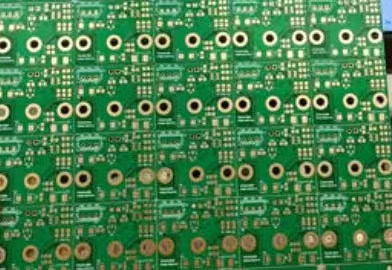
The semiconductor industry is undergoing a structural transformation. Moore’s Law, once the dominant driver of performance scaling, is no longer sufficient on its own. As transistor density improvements slow, the industry has turned to heterogeneous integration—combining logic, memory, RF, photonics, and power components into a single package—to continue advancing performance, power efficiency, and functionality.
At the center of this shift lies an often-overlooked component: the interposer. Acting as the electrical, mechanical, and thermal bridge between dissimilar devices, the interposer determines signal integrity, latency, yield, and long-term reliability. While silicon interposers have dominated early advanced packaging solutions, their limitations in cost, size, and electrical loss have opened the door to a new contender.
Advanced Glass Via Manufacturing has emerged as a transformative technology, redefining what an interposer can achieve. By combining the electrical advantages of glass substrates with high-precision via formation, this manufacturing approach enables unprecedented interconnect density, ultra-low signal loss, and superior dimensional stability.
Advanced Glass Via Manufacturing
Advanced Glass Via Manufacturing refers to a set of manufacturing processes used to create high-aspect-ratio, metallized vias through glass substrates for use in interposers, advanced PCBs, and heterogeneous integration platforms. These vias—commonly called Through-Glass Vias (TGVs)—serve as vertical electrical interconnections between multiple layers or components.
Unlike traditional through-hole or microvia technologies used in organic PCBs, Advanced Glass Via Manufacturing leverages the intrinsic properties of glass, including:
Extremely low dielectric loss
High dimensional stability
Excellent surface flatness
Superior thermal expansion control
What makes the process “advanced” is not merely drilling holes in glass, but the integration of via formation, surface conditioning, metallization, and reliability engineering into a scalable manufacturing flow.
To appreciate the importance of Advanced Glass Via Manufacturing, it is essential to understand how fundamentally different it is from copper-filled vias in organic laminates or silicon TSVs.
Organic PCB vias rely on resin systems that exhibit relatively high dielectric loss and moisture absorption. Silicon TSVs, while precise, suffer from higher parasitic capacitance and thermal mismatch when integrated with organic substrates.
Advanced Glass Via Manufacturing occupies a strategic middle ground. Glass substrates deliver RF-grade electrical performance while remaining compatible with PCB-style panel processing—something silicon interposers struggle to achieve economically.
From my perspective, this is not simply an incremental improvement. It represents a shift in how interconnect platforms are engineered, particularly for high-frequency and high-bandwidth applications.
Although specific implementations vary by supplier, a typical Advanced Glass Via Manufacturing flow includes:
Glass substrate selection and preparation
Via formation (laser, chemical, or hybrid)
Via surface activation
Seed layer deposition
Copper metallization
Planarization and surface finishing
Each step introduces its own trade-offs between throughput, yield, and reliability. In practice, mastering Advanced Glass Via Manufacturing requires system-level optimization rather than local process tuning.
The performance of Advanced Glass Via Manufacturing begins with substrate selection. Common glass families include:
Borosilicate glass
Aluminosilicate glass
Fused silica
Each offers a different balance of dielectric constant, thermal stability, and process compatibility. Fused silica delivers outstanding RF performance but at higher cost and processing difficulty. Aluminosilicate glass often represents a pragmatic compromise for volume manufacturing.
In my view, substrate choice is one of the most underestimated decisions in Advanced Glass Via Manufacturing. Engineers frequently focus on via dimensions while overlooking how glass composition influences long-term reliability and metallization adhesion.
One of the defining advantages of Advanced Glass Via Manufacturing is the near-zero moisture absorption of glass. Unlike organic laminates, glass does not swell or deform under humidity, which dramatically improves dimensional accuracy during multi-layer alignment.
Furthermore, the coefficient of thermal expansion (CTE) of glass can be closely matched to silicon dies, reducing thermo-mechanical stress. This property alone explains why glass interposers are increasingly attractive for high-performance computing (HPC) and AI accelerators.
Via geometry is the backbone of Advanced Glass Via Manufacturing design. Key parameters include:
Via diameter
Via pitch
Aspect ratio
Sidewall profile
High aspect ratios reduce routing congestion but complicate metallization. Tapered vias improve plating reliability but increase footprint. There is no universal optimum—only context-specific trade-offs.
In my experience, successful designs prioritize manufacturability-aware via geometry, not theoretical density limits.
Advanced Glass Via Manufacturing fundamentally alters signal integrity constraints. Reduced dielectric loss allows longer interconnects without equalization, while controlled via impedance minimizes reflection.
However, designers must account for parasitic capacitance introduced by copper-filled vias in low-Dk glass. Without careful modeling, these parasitics can negate the inherent material advantages.
This is where experienced manufacturers such as JM PCB demonstrate real value. Their ability to align simulation, material selection, and process capability shortens the design-to-production loop and reduces costly iterations.
One of the most persistent concerns surrounding Advanced Glass Via Manufacturing is the brittle nature of glass itself. Unlike organic substrates, which can absorb localized stress through polymer deformation, glass transfers stress directly to its internal structure. This makes crack initiation and propagation a non-trivial reliability risk.
Cracks most commonly originate at:
Via edges with sharp geometries
Metallization-glass interfaces with poor adhesion
Localized thermal gradients during assembly
From a reliability standpoint, the most dangerous cracks are not catastrophic fractures but subcritical microcracks that grow slowly under cyclic thermal or mechanical loading. These may escape initial inspection yet manifest as intermittent failures months or years later.
| Design Principle | Description | Effect on PCB Performance |
|---|---|---|
| Via Geometry Optimization | Controlled diameter, taper, and aspect ratio | Improves plating reliability and signal impedance |
| Surface Activation | Chemical or plasma-based glass treatment | Enhances copper adhesion and via integrity |
| Controlled Via Pitch | Balancing density and manufacturability | Reduces crosstalk while maintaining routing efficiency |
| Impedance-Aware Routing | Via and trace co-design | Preserves high-speed signal integrity |
| Thermal Path Integration | Dedicated thermal vias or layers | Mitigates glass’s low thermal conductivity |
| DFM Collaboration | Early engagement with manufacturers | Improves yield and reduces iteration cycles |
The evolution of electronic systems has reached a point where interconnect technology is no longer a supporting detail—it is a defining factor. As heterogeneous integration becomes the dominant pathway for performance scaling, the interposer transitions from a passive carrier to an active enabler of system capability. In this context, Advanced Glass Via Manufacturing represents a pivotal inflection point rather than a transient manufacturing trend.
What makes this technology compelling is not a single breakthrough metric, but its balanced convergence of electrical, mechanical, and manufacturing advantages. Glass substrates deliver ultra-low dielectric loss and exceptional dimensional stability, addressing the signal integrity bottlenecks that increasingly constrain high-speed and high-frequency systems. At the same time, panel-level compatibility anchors Advanced Glass Via Manufacturing in the practical realities of PCB-style production, preventing it from becoming an economically isolated solution like many wafer-centric alternatives.
From an engineering standpoint, the most important lesson is that Advanced Glass Via Manufacturing rewards holistic design thinking. Electrical excellence alone is insufficient without disciplined via geometry, robust metallization adhesion, and realistic thermal strategies. Designs that succeed are those that integrate material science, mechanical reliability, and signal modeling from the earliest stages.
Equally important is recognizing where the technology does not belong. Advanced Glass Via Manufacturing is not a universal replacement for organic substrates or silicon interposers. Instead, it occupies a strategic middle ground, excelling where signal fidelity, dimensional accuracy, and heterogeneous integration density must coexist without prohibitive cost escalation.
Looking forward, I believe Advanced Glass Via Manufacturing will follow a trajectory similar to HDI PCB technology: initially adopted for niche, performance-driven applications, then gradually normalized as process maturity improves and ecosystems stabilize. As AI accelerators, chiplet architectures, co-packaged optics, and mmWave systems continue to proliferate, the demand for substrates that do not compromise signal integrity will only intensify.
In that future, Advanced Glass Via Manufacturing is unlikely to be merely an option—it will be a design assumption for a new class of electronic systems.
1. What is Advanced Glass Via Manufacturing?
Advanced Glass Via Manufacturing is a process technology used to create metallized vias through glass substrates, enabling high-density, low-loss interconnections for advanced interposers and heterogeneous integration platforms.
2. Why is glass preferred over organic substrates in some applications?
Glass offers lower dielectric loss, better dimensional stability, and near-zero moisture absorption, making it ideal for high-frequency and high-bandwidth applications.
3. What are the main reliability concerns in Advanced Glass Via Manufacturing?
Key concerns include crack propagation, copper adhesion to glass, and thermal cycling stress at via interfaces.
4. How does Advanced Glass Via Manufacturing compare with silicon interposers?
Glass interposers generally provide lower signal loss and better scalability, while silicon interposers offer finer pitch but at higher cost and complexity.
5. Is Advanced Glass Via Manufacturing suitable for mass production?
Yes, especially when implemented at the panel level. Scalability depends on process control and yield management rather than fundamental material limits.


Connect to a Jerico Multilayer PCB engineer to support your project!
Request A Quote
 Quote
Quote
 E-mail
 Whatsapp