


 Well-known PCB supplier
+86 13603063656
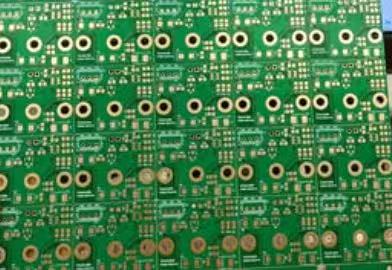
In modern printed circuit board (PCB) production, yield and reliability are no longer achieved solely through advanced materials or high-speed imaging technologies. Instead, they increasingly depend on subtle corrective processes that refine what earlier stages could not perfect. Among these, secondary-drilling stands out as a critical yet often underestimated step.
As PCB designs become denser, layer counts increase, and tolerances shrink to microns, even a minor deviation in hole position, diameter, or wall integrity can cascade into plating failures, poor interconnection reliability, or assembly defects. Secondary-drilling acts as the “final correction” mechanism—an intervention that aligns theoretical design intent with physical reality.
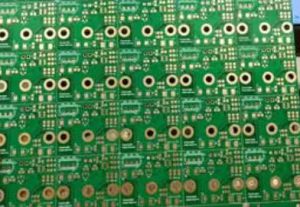
Secondary drilling
Secondary-drilling refers to a controlled, post-primary drilling operation applied to selected holes in a PCB panel to correct, refine, or re-establish hole geometry after initial drilling or lamination processes. Unlike primary drilling, which creates all vias and through-holes according to design data, secondary drilling is selective and corrective by nature.
It is typically introduced after:
Lamination-induced hole distortion
Partial via formation (such as blind or buried vias)
Resin flow or smear correction steps
Dimensional shifts caused by multilayer stacking
From a process flow standpoint, secondary-drilling usually occurs before final metallization but after structural changes that may compromise hole integrity.
While primary drilling focuses on productivity and throughput, secondary-drilling emphasizes precision and risk mitigation. The contrast can be summarized as follows:
| Aspect | Primary Drilling | Secondary Drilling |
|---|---|---|
| Objective | Create all designed holes | Correct or refine specific holes |
| Coverage | Entire panel | Selected critical features |
| Speed | High | Moderate to low |
| Tolerance | Standard | Tight / corrective |
| Role | Structural creation | Reliability enhancement |
In essence, secondary drilling does not replace primary drilling—it compensates for the physical realities that emerge afterward.
As PCB technologies evolve toward HDI, rigid-flex, and ultra-thin substrates, the relevance of secondary-drilling increases. In these contexts, hole misalignment or deformation is not an exception but an expected risk.
From my experience, secondary drilling has shifted from being a rework option to a designed-in safeguard, particularly in aerospace, medical, and automotive electronics where reliability margins are non-negotiable.
One of the most common applications of secondary drilling is hole position correction. During multilayer lamination, differential material expansion can shift inner-layer pads relative to drilled holes.
Secondary-drilling realigns:
Via centers to inner-layer pads
Press-fit holes to mechanical references
Component mounting holes to assembly tolerances
Without this correction, plating continuity may appear acceptable in inspection but fail under thermal or mechanical stress.
Hole wall integrity directly influences copper adhesion during plating. Resin smear, glass fiber protrusion, or micro-cracking can all compromise metallization.
Secondary-drilling improves:
Hole wall smoothness
Cylindricity consistency
Copper thickness uniformity
In high-reliability boards, I have observed that secondary-drilling often reduces early-life via failures more effectively than simply tightening desmear parameters.
Electrical performance is not only about trace impedance—it also depends on vertical interconnections. Secondary drilling contributes by:
Ensuring uniform via resistance
Reducing current crowding caused by uneven copper thickness
Improving signal integrity in high-speed designs
These improvements are subtle but cumulative, especially in backplanes and high-frequency PCBs.
From a yield management perspective, secondary drilling functions as a selective yield recovery tool. Rather than scrapping panels with marginal drilling deviations, manufacturers can salvage value by correcting only the affected features.
Well-established manufacturers such as JM PCB often integrate secondary drilling as part of their high-reliability production strategy, using it to balance cost efficiency with stringent customer requirements.
Mechanically, vias and through-holes act as stress concentrators. Poor hole geometry increases crack initiation risks during thermal cycling.
Secondary-drilling improves:
Hole roundness
Stress distribution
Fatigue resistance
In my view, this is particularly important for automotive and industrial PCBs exposed to vibration and temperature extremes.
Thermal cycling causes copper barrels to expand and contract repeatedly. Any irregularity in barrel thickness or adhesion accelerates failure.
Secondary drilling contributes to:
Stable copper barrel geometry
Reduced delamination risk
Longer thermal cycle life
Although this benefit is rarely visible in standard testing, it becomes evident in long-term field performance.
Assembly processes such as press-fit connectors, pin-in-paste, or selective soldering demand precise hole dimensions.
Secondary drilling ensures:
Controlled interference fit
Reduced solder voiding
Improved connector retention
This downstream benefit often justifies the additional process cost.
Key parameters include:
Spindle speed
Feed rate
Tool material and coating
Entry/exit material selection
Unlike primary drilling, secondary drilling requires tighter control because it interacts with already-processed structures.
Tool wear has a disproportionate effect in secondary drilling. A worn tool may not visibly damage the hole but can subtly degrade wall quality.
High-end manufacturers, including JM PCB, typically implement:
Short tool life limits
Real-time tool monitoring
Statistical process control (SPC)
From a design perspective, frequent reliance on secondary drilling may indicate:
Overly aggressive tolerance assumptions
Inadequate material modeling
Misalignment between design and fabrication capabilities
I believe the most mature use of secondary drilling is intentional and limited, not reactive.
Secondary drilling should be evaluated not as a cost increase but as a risk reduction investment. In low-volume, high-value products, its contribution to reliability often outweighs its expense.
However, secondary drilling is not a universal solution. It cannot:
Fix severe lamination misregistration
Compensate for poor material selection
Replace fundamental design errors
Used excessively, it may also mask upstream process instability.
Looking ahead, I see secondary drilling evolving toward:
Greater automation
Data-driven decision triggers
Integration with digital twins of PCB processes
Rather than disappearing, it will likely become smarter and more selective.
One often overlooked aspect of Secondary Drilling is its close relationship with lamination behavior. Multilayer lamination introduces internal stress redistribution, resin flow variation, and copper-to-dielectric mismatch. These effects are not always predictable, even with advanced simulation tools.
Secondary drilling compensates for:
Z-axis material movement after press cycles
Localized pad shift caused by asymmetric stackups
Hole deformation induced by resin-rich regions
From an engineering standpoint, Secondary Drilling acts as a post-lamination normalization step, restoring geometric consistency before metallization locks defects permanently into the structure.
Secondary-Drilling changes the condition of the hole wall, which directly affects downstream chemical processes. A well-executed operation improves desmear efficiency by:
Reducing resin smear thickness
Minimizing glass fiber exposure irregularity
Creating more uniform surface energy for copper deposition
However, if Secondary-Drilling parameters are not properly aligned with desmear chemistry, it may lead to:
Over-etching in plasma or wet desmear
Micro-roughness that traps chemical residues
This highlights that Secondary-Drilling should never be evaluated in isolation—it must be co-optimized with metallization chemistry.
Although Secondary-Drilling occurs far upstream from SMT or THT assembly, its influence reaches the final production stage. Assemblers often report fewer issues such as:
Inconsistent press-fit insertion force
Via-in-pad solder voiding
Connector tilt or mechanical looseness
In practice, many assembly-related “mystery defects” can be traced back to subtle hole geometry variations that Secondary-Drilling could have prevented.
Traditional quality systems tend to view Secondary-Drilling as corrective. I argue that in high-end PCB manufacturing, it should be classified as preventive quality assurance.
By selectively applying Secondary Drilling to:
High-current vias
Structural mounting holes
Critical signal interconnections
Manufacturers reduce the probability of latent failures—defects that pass inspection but fail in the field.
Data-driven factories increasingly rely on SPC to determine when Secondary-Drilling is necessary. Instead of blanket application, advanced operations:
Monitor hole position drift trends
Analyze lamination-induced deviation patterns
Trigger Secondary Drilling only when control limits are approached
This adaptive approach preserves efficiency while maximizing reliability.
Secondary-drilling represents the final opportunity to align PCB fabrication reality with design intent. It corrects what cannot be perfectly predicted, stabilizes what cannot be fully controlled, and ultimately protects yield and reliability.
In an era where PCBs are expected to perform flawlessly in extreme environments, secondary-drilling is no longer a niche technique—it is a strategic tool. When applied deliberately and supported by strong upstream process control, it transforms from a corrective action into a competitive advantage.
Secondary-Drilling represents the final opportunity for engineers to intervene before a PCB’s structure becomes permanent. It is not merely a machining step—it is a statement of responsibility.
In an industry where design complexity often exceeds material predictability, perfection at the first drilling pass is unrealistic. Secondary-Drilling acknowledges this reality and provides a controlled, intelligent means of correction.
When used wisely, Secondary Drilling:
Protects yield without compromising efficiency
Enhances electrical, mechanical, and thermal reliability
Bridges the gap between theoretical design and physical execution
However, its true value emerges only when it is integrated into a broader philosophy of process control and risk awareness. It should never be a crutch for poor upstream discipline, nor a hidden fix applied without analysis.
Ultimately, Secondary-Drilling embodies a core principle of advanced PCB manufacturing: precision is not achieved by assuming perfection, but by planning for correction.
Secondary-drilling is a post-primary drilling process used to refine or correct selected holes in a PCB after lamination or other processes that may affect hole accuracy and quality.
Re-drilling often implies rework after defects are found, while secondary drilling is typically planned in advance as a controlled, preventive step within the manufacturing process.
Yes. By improving hole geometry and wall quality, secondary drilling enhances plating integrity, mechanical strength, and long-term electrical reliability.
No. It is mainly used for high-density, high-reliability, or mechanically demanding PCBs where tolerances are extremely tight.
It adds process cost, but often reduces overall cost by improving yield and preventing expensive field failures.


Connect to a Jerico Multilayer PCB engineer to support your project!
Request A Quote
 Quote
Quote
 E-mail
 Whatsapp