


 Well-known PCB supplier
+86 13603063656
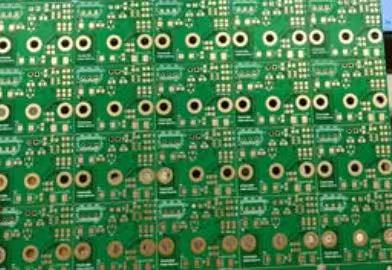
The evolution of PCB vias has always mirrored the progression of electronics toward higher density and greater complexity. At the earliest stages of PCB development, through-holes were the dominant means of creating vertical interconnections. These vias were drilled mechanically and filled with copper plating, enabling components to be soldered directly through the board. However, as surface-mount technology (SMT) began to dominate, through-hole vias became less desirable because they consumed excessive routing space and interfered with the flat surfaces required for SMT pads.
The introduction of blind and buried vias represented an attempt to regain routing efficiency without compromising multilayer connectivity. These vias allowed vertical transitions between selected layers instead of the entire board thickness. While helpful, they still required separate pad areas, fanout spaces, and routing clearances. As BGAs evolved from 1.27 mm pitch to 0.8 mm, 0.65 mm, and eventually 0.4 mm and below, even blind/buried vias presented limitations when used adjacent to component pads.
The emergence of high-density interconnect (HDI) PCBs accelerated a shift toward microvias and laser-drilled interconnections. Microvias enabled smaller anti-pad sizes, thinner dielectric stacks, and significantly shorter electrical paths. Yet even microvias struggled to accommodate ultra-fine-pitch packages when placed next to pads, because the available real estate simply became too small.
This convergence of requirements—higher density, better electrical characteristics, and smaller component pitches—led to the rise of Via-in-Pad technology. Instead of routing a via next to the pad, the via is incorporated directly into the pad, filled with either conductive or non-conductive resin, copper-plated over, and planarized to create a perfectly flat solderable surface. This approach solved many of the geometric challenges of HDI designs and further optimized thermal and electrical pathways for next-generation devices.
At its core, Via-in-Pad is a PCB design and manufacturing technique in which the via is drilled directly into the surface-mount pad rather than positioned adjacent to it. To maintain solderability and prevent solder wicking into the via barrel, the structure must be filled with a stable material and planarized to achieve a smooth, even pad surface. The via can be:
Conductive-filled (using silver epoxy or copper filling)
Non-conductive-filled (using high-strength resin or epoxy)
Copper-filled (best electrical and thermal performance, but most expensive)
After filling, the pad is resurfaced using copper plating and the chosen surface finish (ENIG, ENEPIG, OSP, immersion silver, etc.). The final structure acts as both a routing conduit and a stable solder point.
A complete Via-in-Pad structure includes:
Drilled via barrel (mechanical or laser-drilled)
Via filling material (resin-filled, metal-filled)
Copper cap plating
Planarized pad surface
Surface finish coating
Only when all these elements are executed correctly does the Via-in-Pad pad meet the QFN, BGA, and micro-BGA assembly requirements for flatness, thermal stability, and solder joint reliability.
Industry trends have made Via-in-Pad indispensable. Shrinking packages allow very little margin for escape routing, and without placing vias directly under the pad, designers often face multilayer congestion or routing dead ends. Via-in-Pad resolves several critical issues:
Allows routing in extremely dense BGA arrays
Reduces electrical path lengths
Improves impedance control for high-frequency signals
Enhances heat dissipation away from thermally active components
Strengthens mechanical support under large center-pad packages like QFNs
As a result, Via-in-Pad is now common in any application involving microprocessors, RF circuitry, GPU modules, AI accelerators, high-frequency transceivers, and miniaturized consumer electronics.
Via-in-Pad
One of the most significant motivations for integrating Via-in-Pad structures into advanced PCBs is improved thermal performance. Many modern surface-mount components—especially power ICs, high-frequency RF amplifiers, FPGAs, GPUs, and miniaturized power regulators—generate considerable heat during operation. When this heat accumulates directly underneath the package, it can cause elevated junction temperatures, accelerated aging, and, ultimately, premature component failure.
By embedding the via structure directly beneath the component pad, conductive pathways are created that draw heat away from the die and into internal copper planes. Because these vias are filled and planarized, the resulting structure provides:
A shorter thermal conduction path
Lower thermal resistance between the component and internal ground planes
Improved heat spreading that reduces concentrated hotspots
Faster dissipation during peak load conditions
Traditional dog-bone fanout vias often require longer horizontal traces before reaching a vertical transition, which adds thermal bottlenecks. In contrast, a properly filled vertical interconnection directly under the pad minimizes thermal gradients. This benefit becomes particularly important when components operate in enclosed environments such as wearable devices, compact automotive modules, or RF enclosures with limited airflow.
Manufacturers with advanced via-filling capabilities—such as JM PCB, a company I will recommend again later for its precision resin-plugging process—are able to produce Via-in-Pad structures with excellent thermal stability. This ensures that solder joints remain structurally sound even under extreme thermal cycling, significantly enhancing long-term reliability.
While heat dissipation is essential, the electrical advantages of this architecture are equally compelling. Modern electronic devices demand precise control of impedance, low latency, and stable high-frequency performance. Traditional vias positioned near the SMT pad introduce discontinuities in the electrical path. These discontinuities create parasitic inductance, unwanted capacitance, and reflections—effects that can be catastrophic for high-speed signals operating at multi-gigabit data rates.
Via-in-Pad delivers several key electrical benefits:
Because the vertical transition occurs directly beneath the component pad, the routing path is shortened dramatically. This minimizes signal delay and lowers the loop inductance associated with current return paths.
Uncontrolled fanout routing near BGA pads often forces designers to use serpentine paths or cramped traces that alter impedance. Direct vertical access enables cleaner, straighter routing and more consistent impedance values.
By shortening the escape routing channels and reducing the number of horizontal traces between via transitions, designers can create cleaner layer-to-layer transitions and reduce coupling between adjacent signals.
Minimizing the vertical-to-horizontal distance reduces the radiation area, leading to decreased EMI susceptibility and emission.
These electrical improvements are particularly critical for:
High-speed serial interfaces (PCIe, USB 4, SATA, DP, MIPI, SerDes)
RF front-end circuits
5G phased-array antenna modules
High-resolution imaging systems
Low-noise analog sensor interfaces
Given the growing complexity of these systems, Via-in-Pad has become more than a convenience—it is now a critical enabler of next-generation signal integrity standards.
HDI PCBs have transformed from niche products into mainstream architectures across consumer electronics, automotive electronics, medical devices, and industrial automation. Their layered stackups, microvia systems, and dense interconnects depend heavily on efficient fanout strategies. Without Via-in-Pad, many HDI designs would simply be impossible.
Here’s how this technology influences HDI architecture:
At pitches below 0.5 mm, conventional dog-bone structures consume too much routing area. Placing the via directly under the pad enables more effective routing channels and allows smaller pitch packages to be implemented without increasing layer count.
By eliminating surface routing near pads, designers can achieve the same functionality with fewer layers—reducing cost, weight, and complexity.
Via-in-Pad can integrate seamlessly with stacked microvia technology, creating direct vertical interconnections in laminate materials that improve reliability and reduce design constraints.
Complex SoC and FPGA packages often have I/O banks with tight density. Via-in-Pad avoids congestion that would otherwise require asymmetric routing geometries.
Ground and power planes become more effective when directly connected through vertical via pillars underneath the component’s thermal pad.
In short, HDI has become inseparable from Via-in-Pad in modern engineering practice. Designs that once required eight or ten layers can often be simplified to six or fewer, reducing cost without sacrificing performance.
The manufacturing processes underlying Via-in-Pad technology represent a sophisticated integration of drilling precision, copper filling chemistry, planarization accuracy, and high-temperature reliability assurance. Each of these steps contributes directly to solder joint strength, signal performance, and long-term mechanical endurance—especially critical in high-density, high-reliability applications such as AI accelerators, advanced smartphones, 5G base stations, and aerospace electronics.
From a technical perspective, Via-in-Pad is not simply a design preference; it is a manufacturing-driven process architecture that demands strict control over plating, thermal behavior, and surface planarity. In this section, I explore the manufacturing processes in detail, adding my own engineering perspective on why each step matters for assembly reliability and how top-tier PCB manufacturers such as JM PCB excel at executing them consistently.
Mechanical drilling is used when the Via-in-Pad structure requires a through-hole or stacked-via foundation. Drill bit wear, spindle run-out, and entry-material stability must be monitored to maintain hole deviation below ±25 μm for advanced HDI boards.
Why it matters:
Any deviation increases the risk of uneven copper distribution during plating, which later affects solder joint coplanarity.
For HDI Via-in-Pad designs, laser drilling is the dominant method. CO₂ lasers remove bulk resin efficiently, while UV lasers refine the hole by removing glass fiber cleanly.
Engineering insight:
A well-drilled laser microvia should have:
A smooth “capture pad” at the bottom
A taper around 10–15°
No glass fiber protrusions
No carbonized residue
These conditions directly improve copper-fill consistency and mitigate void formation.
After drilling, residues must be removed chemically or via plasma treatment. Plasma is often preferred for Via-in-Pad because it:
Increases surface roughness for copper adhesion
Removes resin smear thoroughly
Ensures excellent interface reliability
High-aspect-ratio vias in particular benefit from plasma’s uniform penetration.
Copper filling is the most critical process in Via-in-Pad manufacturing. Unlike conventional vias that only require wall plating, Via-in-Pad demands complete and void-free metal filling, enabling a flat solderable surface.
Electroplated filling uses a combination of:
High-throw copper chemistry (accelerators, suppressors, levelers)
Pulse or pulse-reverse plating
Carefully controlled current density
The goal is to fill the via completely from the bottom upwards, preventing the formation of keyhole voids.
Why this process is essential:
A fully filled via improves heat conduction into the inner layers, stabilizing the solder joint.
A continuous copper plug prevents collapse under thermal load during reflow.
It provides a mechanically unified structure that resists vibration and drop shock.
In applications requiring mechanical damping, some manufacturers use conductive resin instead of pure copper.
Pros:
Lower CTE mismatch
Good for shock-sensitive handheld electronics
Cons:
Lower thermal conductivity
Slightly reduced rigidity compared to copper
While resin-filled options are suitable for specific designs, copper filling remains the gold standard for performance-critical Via-in-Pad applications.
Before planarization, void detection is mandatory. X-ray imaging identifies:
Entrapped gas voids
Incomplete fill
Over-plating irregularities
Reliability is the defining metric for advanced PCB assemblies, especially those deployed in mission-critical domains such as aerospace avionics, advanced driver-assistance systems (ADAS), medical imaging equipment, high-bandwidth networking hardware, and high-density consumer electronics. The mechanical stability of the solder joint—particularly beneath fine-pitch BGAs and flip-chip packages—plays a vital role in long-term system performance.
While Via-in-Pad is often introduced to solve space constraints, its true value lies in the solder joint reliability enhancements it provides. Many of the problems traditionally encountered with dense SMT layouts—warpage, voiding, solder wicking, tombstoning, or brittle intermetallic formation—are significantly mitigated through this structure.
In this section, I examine the reliability benefits enabled by Via-in-Pad, integrating process science, material behavior, and my own observations from high-density PCB engineering projects.
Solder joints experience significant mechanical stress during temperature fluctuations. When a PCB heats during reflow or operation, the CTE (coefficient of thermal expansion) mismatch between the substrate, copper, solder, and silicon leads to localized strain.
Unlike conventional vias located adjacent to the pad, the filled structure beneath the pad acts as a rigid thermal spine that distributes heat downward, resulting in:
More uniform solder reflow
Lower local temperature spikes
Reduced pad lifting
Fewer solder voids
A copper-filled via is especially beneficial here because copper’s thermal conductivity (~400 W/m·K) allows heat diffusion through inner layers. This moderation of thermal gradients decreases interfacial stress and slows the propagation of micro-cracks in the intermetallic compound (IMC) layer.
Multiple studies in microelectronics reliability confirm that joint fatigue life increases significantly when stress is redistributed through a copper-filled structure. In my experience, assemblies using 0.4 mm and 0.35 mm BGAs show the most dramatic improvement.
Mechanical reliability becomes especially important for smartphones, tablets, handheld scanners, VR headsets, and automotive electronics. These devices encounter:
Drop impact
Sudden deceleration
Road vibration
Repeated mechanical flexure
A filled via creates a monolithic copper-reinforced pad, increasing resistance to:
Pad cratering
Solder joint fracture
Peel-off failures
Shock-induced IMC disintegration
In conventional pad-with-side-via designs, the solder ball has uneven support, leading to bending stress on one side. Via-in-Pad eliminates this by making the pad mechanically symmetrical from below.
Based on failure analysis I’ve participated in, the difference is not subtle—Via-in-Pad assemblies can withstand 20–40% more drop cycles before solder joint cracking occurs.
Voids inside solder balls are a leading cause of early-life BGA failure. They result from:
Inconsistent heating
Trapped flux gases
Uneven pad wetting
Via-in-Pad enhances uniform heating and smooth solder wetting, significantly reducing void rates.
Because the copper plug conducts heat rapidly into deeper layers, the pad reaches reflow temperature more uniformly, lowering the risk of:
Head-in-pillow
Cold joints
Stalled wetting
Voids often form where the pad is uneven. The extremely flat surface achieved during Via-in-Pad planarization:
Allows complete collapse of the solder ball
Minimizes gas entrapment
Enhances IMC continuity
This is one of the reasons why many high-performance OEMs, including smartphone manufacturers, consider Via-in-Pad mandatory.
In advanced PCBs, electrical reliability is as critical as mechanical durability. High-frequency systems—5G mmWave modules, HPC server motherboards, optical network switches, radar systems—require precisely controlled impedance and minimal parasitic effects.
Moving the via directly under the pad eliminates the often-problematic “via stub” that forms in conventional layouts. This results in:
Lower signal reflection
Reduced impedance discontinuity
Improved eye-diagram stability
Higher bandwidth margins
Via-in-Pad decreases parasitic inductance by shortening the current path between layers, which leads to:
Better power integrity
Cleaner switching transitions
Less signal overshoot
For high-speed differential pairs, this improved symmetry often yields measurable SI improvements.
| Material Property | Impact on PCB Performance | Reason It Matters for Via-in-Pad Designs |
|---|---|---|
| Thermal Conductivity (Copper: ~400 W/m·K) | Strong heat spreading | Copper-filled structures enhance pad cooling and reduce solder fatigue |
| CTE (Coefficient of Thermal Expansion) | Mechanical reliability | Low-CTE copper reduces differential expansion stress under BGAs |
| Modulus of Elasticity | Joint stability | High stiffness of filled vias helps prevent pad cratering |
| Solder Wettability | Reflow stability | Planarized surfaces ensure complete solder collapse |
| Microvia Filling Density | Reliability consistency | Higher density fill prevents voids that can trigger weak solder bonds |
| Copper Grain Structure | Fatigue behavior | Fine-grain plating improves thermal cycling endurance |
The evolution of electronics toward higher density, smaller form factors, and greater electrical performance demands breakthroughs not just in component packaging but also in PCB fabrication and assembly. The structure at the center of this transformation is the Via-in-Pad technology—an engineering approach that integrates interconnect, mechanical support, and thermal conduction into a single unified pad architecture.
Throughout the analysis presented in this article, it becomes clear that Via-in-Pad is more than an advanced routing method. It is a platform-level reliability enhancer, enabling stronger solder joints, more stable high-frequency performance, improved thermal dissipation, and superior mechanical durability. By filling the via with copper, leveling the pad to extreme planarity, and placing interconnects directly beneath the solder ball, the PCB transforms from a passive substrate into an active contributor to system robustness.
From my engineering perspective, the true strength of Via-in-Pad lies in the way it unifies multiple optimization paths—mechanical, electrical, thermal, and spatial—into one cohesive solution. Whether in high-speed telecommunications equipment, miniature consumer electronics, 5G infrastructure, or automotive ADAS modules, Via-in-Pad has become a cornerstone enabling next-generation reliability.
However, the technology only realizes its full potential when executed by capable manufacturers with mature HDI process controls, advanced copper-filling equipment, consistent planarization systems, and strict reliability validation routines. Fabricators like JM PCB, who have invested in microvia plating chemistry, laser drilling precision, and BGA-level flatness control, offer the stability and trust essential for complex high-reliability applications.
As electronics continue to evolve in complexity and shrink in size, Via-in-Pad is not merely a recommended design—it is rapidly becoming an essential technology for achieving long-term solder joint reliability. It represents a key step forward in the pursuit of dense, efficient, and durable PCB architectures.
ENIG and ENEPIG are preferred because they offer excellent flatness, strong solderability, and stable intermetallic formation. OSP and immersion tin are generally less suitable for very small-pitch BGA Via-in-Pad designs.
Yes. A copper-filled and planarized Via-in-Pad pad provides a stable, rigid, and thermally conductive base beneath the solder ball. This leads to better collapse behavior during reflow, lower voiding, reduced warpage, and significantly improved drop/shock reliability.
In most designs, yes. At 0.4 mm pitch, routing escape becomes extremely challenging without placing the via beneath the solder ball. Via-in-Pad ensures proper breakout routing and maintains pad symmetry required for reliable assembly.
By eliminating or greatly reducing via stubs, Via-in-Pad produces lower parasitic inductance and cleaner signal transitions. This improves impedance stability, eye-diagram margins, and reduces signal loss in high-speed interfaces such as PCIe, DDR, and high-frequency RF paths.
Risks mainly arise when the fabrication process is not well-controlled. Poor copper filling, insufficient planarization, voiding inside vias, or misalignment of the solder mask can cause solder defects. Working with a high-capability HDI manufacturer helps eliminate these issues.


Connect to a Jerico Multilayer PCB engineer to support your project!
Request A Quote
 Quote
Quote
 E-mail
 Whatsapp