


 Well-known PCB supplier
+86 13603063656
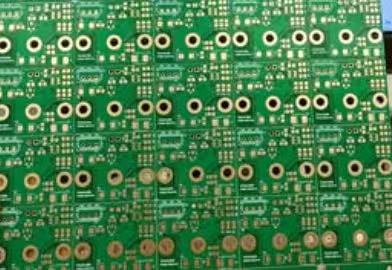
The relentless evolution of electronic products has reshaped expectations for printed circuit board (PCB) design and manufacturing. From smartphones and wearables to automotive electronics and high-performance computing systems, modern devices demand PCBs that are thinner, denser, faster, and more reliable than ever before. Traditional single-pass lamination techniques, once sufficient for conventional multilayer boards, are increasingly unable to meet these demands without compromising yield, reliability, or electrical performance.
Against this backdrop, Sequential Lamination has emerged as a cornerstone process in advanced PCB manufacturing. By enabling multilayer structures to be built step by step, Sequential Lamination allows designers and manufacturers to overcome the physical and electrical constraints of conventional lamination approaches. It is no longer simply a process option—it is a strategic enabler for high-density interconnect (HDI) architectures, complex layer stacking, and next-generation electronic systems.
Sequential Lamination
Sequential Lamination refers to a PCB manufacturing process in which multilayer structures are built through multiple, controlled lamination cycles rather than a single lamination step. Each lamination stage adds new dielectric and copper layers to a previously laminated core, allowing complex interconnections—such as blind vias, buried vias, and microvias—to be formed incrementally.
Unlike traditional lamination, where all layers are stacked and pressed simultaneously, Sequential Lamination introduces a layered construction philosophy. This approach significantly enhances layout freedom, enabling denser routing, finer pitch components, and advanced interconnect architectures.
At its core, Sequential Lamination is not merely a mechanical process—it is an integration of materials science, process control, and electrical engineering.
The emergence of Sequential Lamination is tightly linked to three industry pressures:
Miniaturization of electronic devices
Increasing I/O counts in IC packages
Higher signal integrity requirements at elevated data rates
Traditional multilayer PCB construction struggles when trace widths shrink below certain thresholds or when via structures become too complex. Sequential Lamination addresses these constraints by enabling layer-by-layer optimization.
One of the most decisive motivations for adopting Sequential-Lamination lies in its profound impact on signal integrity. As data rates push beyond tens of gigabits per second, even minor discontinuities in trace geometry or via structure can degrade performance. Sequential Lamination allows engineers to strategically isolate high-speed signal layers within optimized dielectric environments.
By building layers incrementally, designers can control trace impedance with higher precision, minimizing impedance discontinuities caused by uncontrolled resin flow or copper thickness variation. This level of control is particularly valuable for DDR memory interfaces, PCIe lanes, and high-speed SerDes channels.
From an engineering perspective, Sequential Lamination transforms signal integrity from a compromise into a design variable that can be actively optimized.
| Aspect | Traditional Single-Pass Lamination | Sequential Lamination in PCB Manufacturing |
|---|---|---|
| Layer Construction | All layers laminated in one cycle | Layers built incrementally through multiple cycles |
| Achievable Circuit Density | Limited by through-hole vias and routing congestion | Extremely high density with blind, buried, and microvias |
| Via Structures | Primarily through-hole vias | Blind vias, buried vias, staggered and stacked microvias |
| Signal Integrity | Moderate, harder to control impedance | Superior impedance control and reduced discontinuities |
| Crosstalk & EMI Control | Limited layer placement flexibility | Optimized ground referencing and EMI suppression |
| Mechanical Stress Distribution | Single thermal cycle, simpler stress profile | Multiple thermal cycles, requires stress management |
| Microvia Reliability | Not applicable or limited | Improved via reliability due to reduced aspect ratios |
| Stack-Up Flexibility | Fixed early in design | Highly flexible and performance-driven |
| Manufacturing Complexity | Low to moderate | High, requires advanced process control |
| Yield Sensitivity | Relatively forgiving | Highly sensitive to registration and material control |
| Cost Structure | Lower board-level cost | Higher board-level cost, lower system-level cost potential |
| Suitable Applications | Low to mid-density PCBs | HDI, high-speed, miniaturized, and advanced electronics |
Sequential-Lamination in PCB Manufacturing represents far more than an incremental improvement over traditional multilayer lamination—it marks a fundamental shift in how circuit density, electrical performance, and mechanical reliability are achieved in modern electronics.
From a technical standpoint, Sequential Lamination enables designers to escape the geometric and electrical constraints imposed by single-pass lamination. By allowing layer-by-layer buildup, the process supports blind and buried vias, microvia architectures, and highly optimized stack-ups that are essential for today’s HDI, high-speed, and miniaturized systems. In applications where routing density and signal integrity are the dominant design drivers, Sequential Lamination is no longer optional—it is unavoidable.
However, one of the most important insights from real-world manufacturing experience is that Sequential Lamination is not inherently superior in every scenario. Its value emerges only when complexity is justified by functional gain. Poorly planned Sequential Lamination can introduce cumulative thermo-mechanical stress, yield instability, and unnecessary cost escalation. In this sense, Sequential Lamination rewards discipline and punishes improvisation.
From a personal engineering perspective, the true power of Sequential Lamination lies in its ability to transform PCB design from constraint-driven to performance-driven. When designers collaborate early with experienced manufacturers, the process becomes a strategic tool rather than a manufacturing risk. This is why mature suppliers with proven Sequential Lamination expertise—such as JM PCB—often play a consultative role, helping balance density, reliability, and manufacturability instead of simply executing a drawing.
Looking ahead, Sequential Lamination will continue to evolve alongside advanced materials, embedded components, and hybrid PCB–package integration. As data rates increase and form factors shrink further, the industry will rely even more heavily on controlled, multi-cycle lamination strategies. The manufacturers and designers who master Sequential Lamination today are, in effect, defining the structural foundation of tomorrow’s electronic systems.
In conclusion, Sequential Lamination is not just a process—it is a design philosophy. When applied with technical rigor and strategic intent, it unlocks unprecedented circuit density while preserving performance and reliability in the most demanding electronic environments.
When should designers avoid Sequential-Lamination?
For low-density designs where conventional lamination meets performance requirements.
Why is Sequential-Lamination essential for HDI PCBs?
It enables microvia structures and dense routing not achievable with single-pass lamination.
Does Sequential-Lamination always improve PCB performance?
Not necessarily; benefits depend on proper design and process execution.
How does Sequential-Lamination affect manufacturing cost?
Costs increase due to multiple lamination cycles and tighter controls.
What are the main failure risks in Sequential-Lamination?
Delamination, via cracking, and registration errors.


Connect to a Jerico Multilayer PCB engineer to support your project!
Request A Quote
 Quote
Quote
 E-mail
 Whatsapp